
Spatial coupling module
SCM · Expanded-beam optical coupling
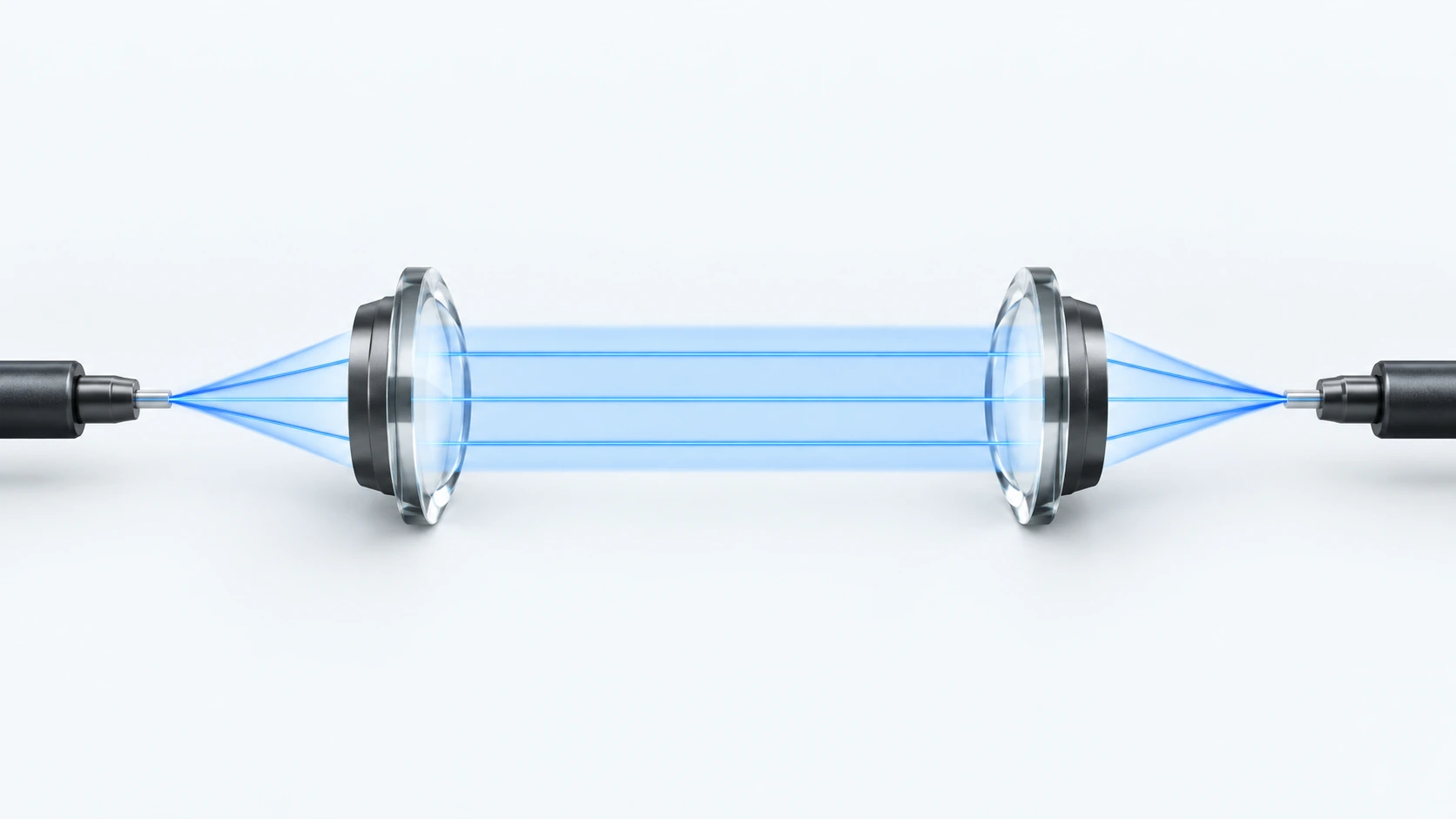
Expanded-beam coupling concept, not a representation of the physical structure
Reliable connections, through every service cycle.
The Spatial coupling module (SCM) uses expanded-beam optical coupling to transmit light between connector end faces. Paired with PMC, it maintains low insertion loss while reducing sensitivity to contamination and the effects of direct end-face contact. It provides a practical approach to assembly, maintenance and repeated connections in high-density equipment.
PMC + SCM. Low-loss connectivity.
0.35 dB
Insertion loss of the PMC + SCM combination
Random mating, ≥97%
Low-loss connectivity with reduced contamination sensitivity, end-face protection and consistent repeated connections.
This specification applies to the PMC + SCM combination.
Designed for real connection environments.
Less sensitive to contamination
When used with an elastomeric connection, improved sealing helps keep dust and contaminants away from the end faces.
Reduced end-face wear
Less direct contact means less friction between end faces. This helps protect ports that undergo repeated mating, supporting routine maintenance and connection life.
Greater alignment tolerance
Free-space optical coupling increases tolerance to small positional deviations, helping maintain consistent performance during assembly and repeated connections.
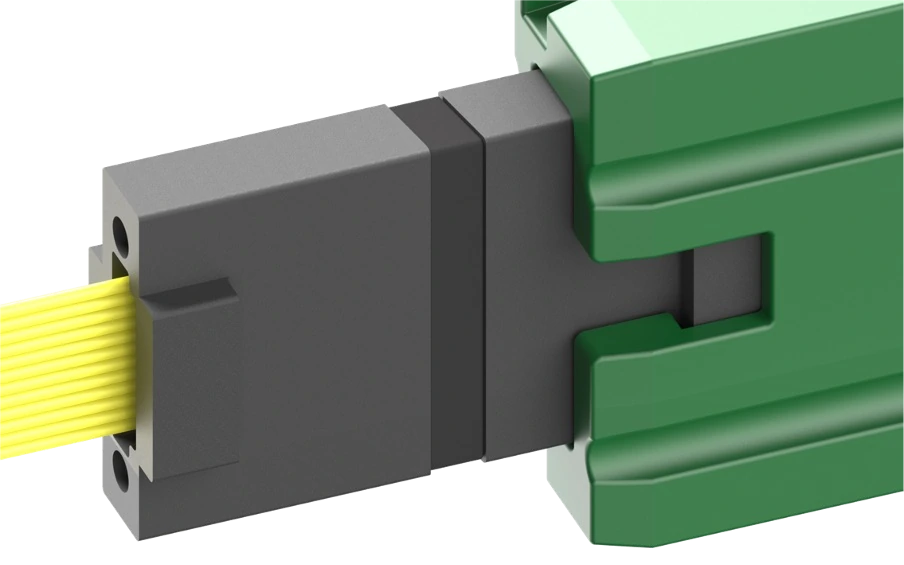
An optional module installed between connector ends, used with adapters and the PMC system.
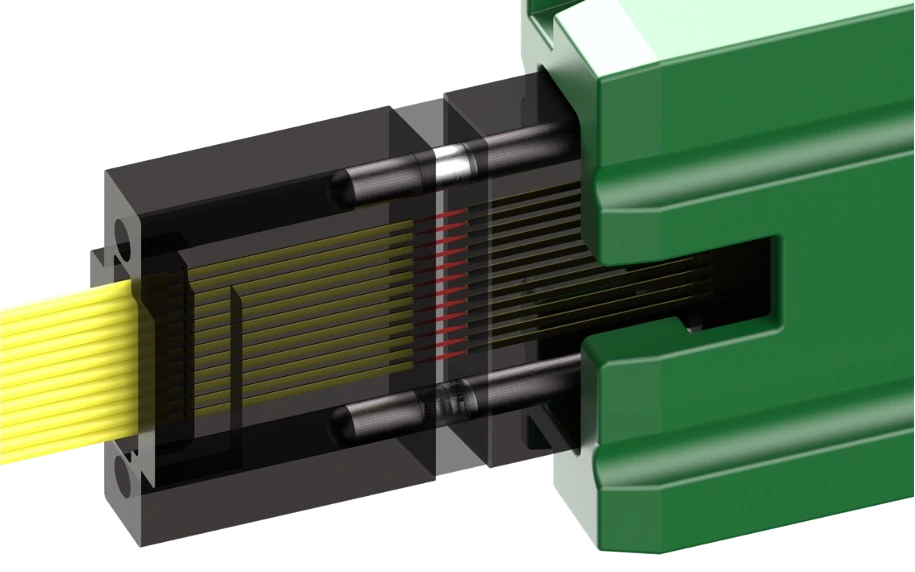
Contamination-resistant design does not eliminate cleaning. Inspect connections as needed and follow the applicable cleaning and maintenance procedures.
Fits into your connection architecture.
Choose a dual-ended PMC or MT direct-insertion configuration to suit your equipment interfaces and maintenance requirements.
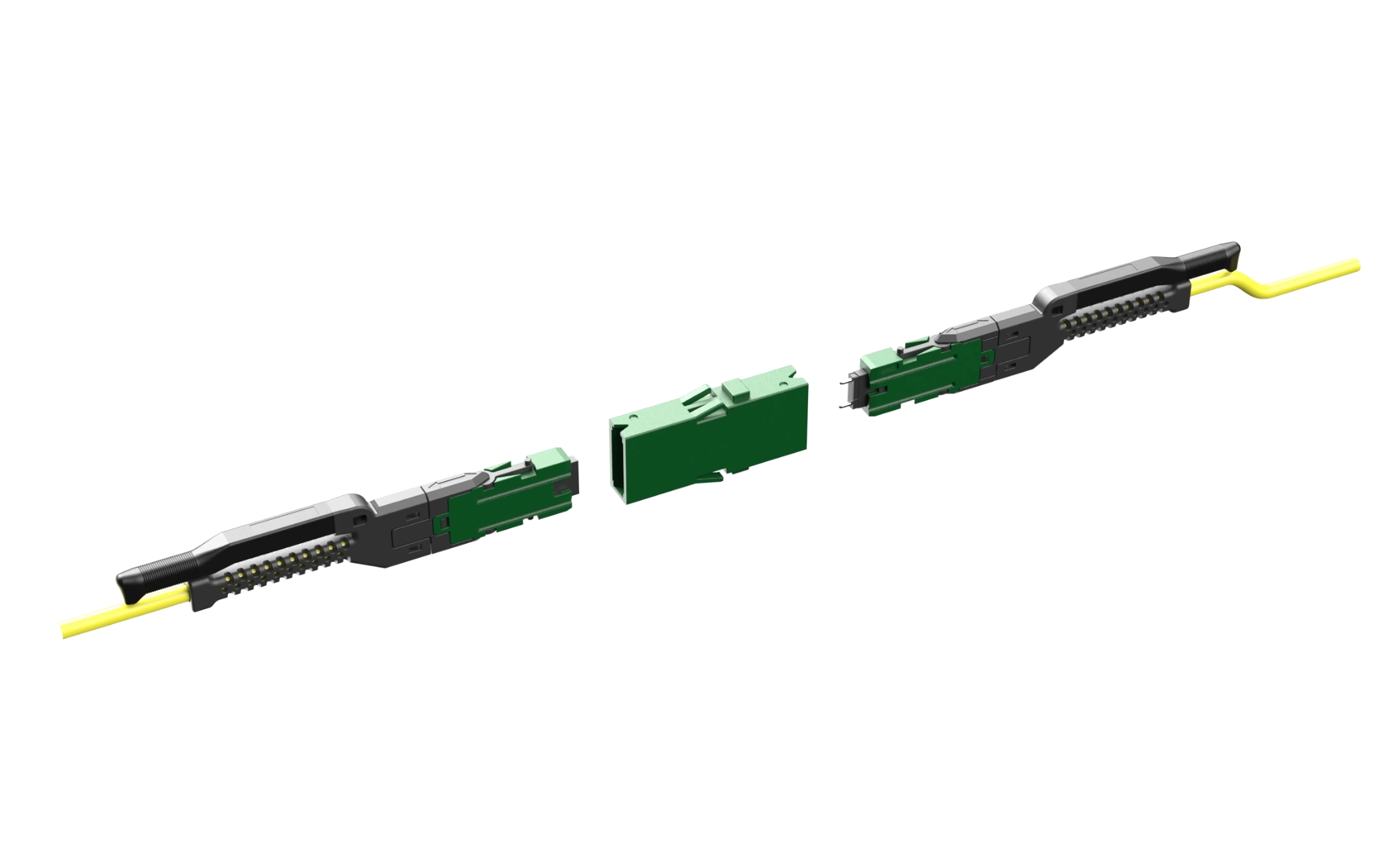
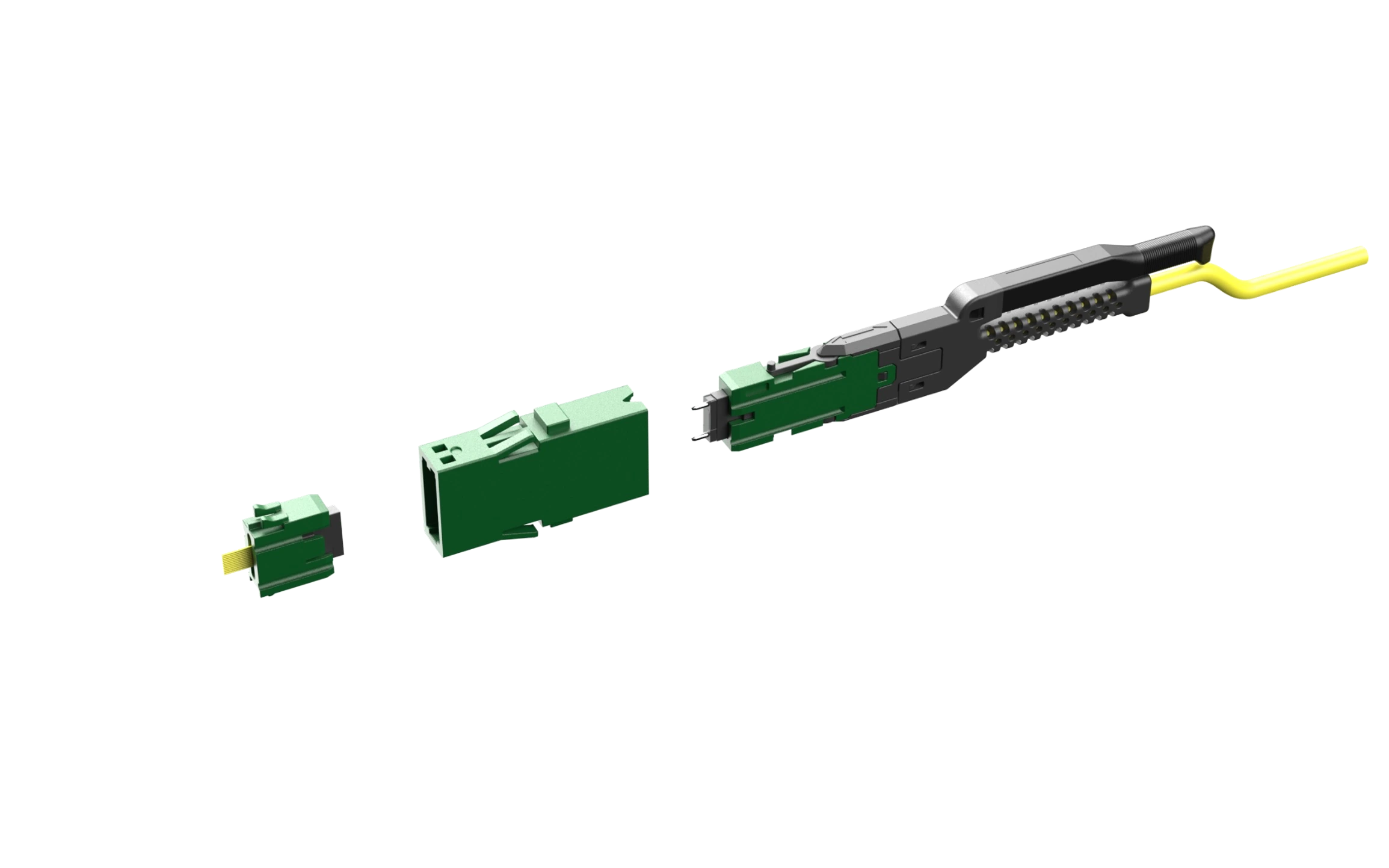
PMC + adapter + SCM + PMC
Add SCM to a dual-ended PMC connection between equipment ports, panels or modules, combining end-face protection with low-loss optical transmission.
Specifications and selection
Start with the combined optical performance, then confirm the configuration for your interfaces and operating environment.
For other connector specifications, refer to the corresponding PMC configuration. Confirm SCM operating wavelength, return loss, alignment tolerance, temperature range and mating-cycle requirements for your project.
Frequently asked questions
How does SCM work, and how does it differ from direct fiber mating?
The Spatial coupling module uses precision optics to expand, transmit and refocus light, creating a non-contact optical connection between fibers. Conventional direct mating relies on precise physical contact between fiber end faces. SCM instead transmits the signal through a free-space optical path, reducing the risk of wear caused by direct contact and offering an alternative interconnect approach for high-density optical communication systems.
How does SCM reduce the effects of dust and repeated mating?
SCM expands the effective beam spot at the coupling interface, reducing the relative impact of small dust particles and localized contamination on signal transmission. Non-contact optical transmission also reduces wear caused by repeated physical contact between fiber end faces, helping improve long-term connection stability and reliability.
How does SCM improve alignment tolerance and insertion-loss consistency?
SCM optimizes the optical path, beam size and focusing characteristics to reduce the effect of small fiber-position deviations on coupling efficiency. With appropriate optical design and assembly, the module can increase tolerance to minor misalignment and reduce performance variation caused by repeated mating or mechanical displacement, improving insertion-loss consistency and stability.
Start with your connection requirements.
Share your interface type, fiber configuration and maintenance needs so we can identify a suitable SCM combination.